- +8617796756813
- +86 17796756813
- mic@zkcorp.com

Henan Zhengzhou Mining Machinery Co., Ltd. (ZK Corp) recently welcomed a customer from the Middle East who is engaged in oilfield development. For oil well cementing, grouting, and related operations, the customer required cement with sulfate resistance suitable for service in formations containing high concentrations of sulfate media. The objective was to help protect the cement stone structure and support the quality and service life of oil wells.
Sulfate-resistant cement requires careful control of clinker mineral composition, gypsum quality, and grinding fineness. It cannot be treated as a simple substitute for ordinary cement. The customer was also starting a new project without an existing production line, an established process scheme, or confirmed raw material sources. The first priority was therefore to establish a reliable technical basis before moving on to plant construction and equipment procurement.
Rather than starting with an equipment proposal, ZK Corp's engineering team reviewed the project from the perspective of the complete cement grinding process. The team identified cement clinker and gypsum as the two key raw materials requiring early evaluation. Clinker mineral composition is an important factor in sulfate resistance, while gypsum quality affects cement setting behavior and strength development.
With guidance from ZK Corp's technical team, the customer contacted multiple raw material suppliers and provided their material analysis reports for review. ZK Corp's engineers assessed the reports item by item.
For cement clinker, the review focused on indicators relevant to sulfate resistance, including the C3A (tricalcium aluminate) content. For gypsum, the team examined its grade, purity, and potentially harmful impurities. Based on the available data, ZK Corp provided technical comments on the advantages and potential risks associated with each supplier's materials.
The customer compared the suppliers and selected the raw material sources. This step established the initial material basis for the subsequent formulation and grinding tests.
Suitable raw materials do not automatically guarantee a workable cement formula. To reduce the risk of quality variation after industrial commissioning, ZK Corp recommended conducting tests before building the production line. The test data could then inform process design and equipment selection.
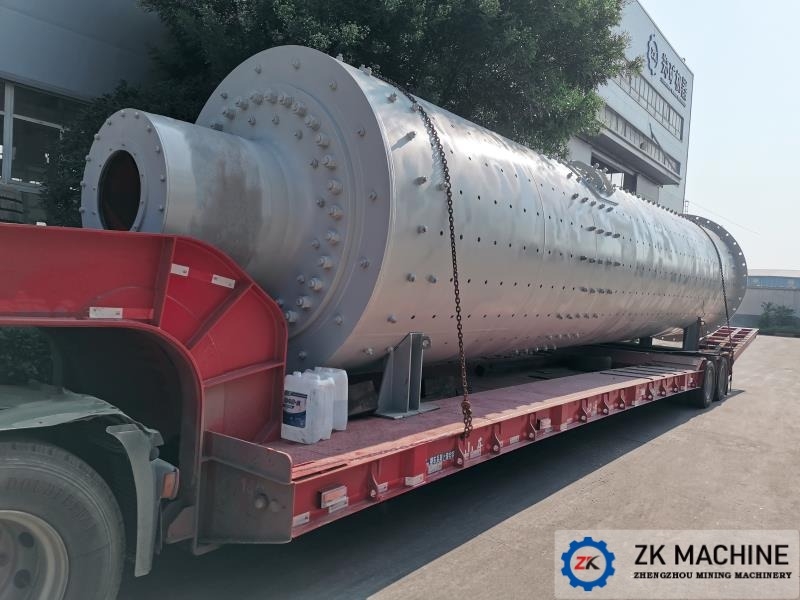
ZK Corp has a testing platform that supports testing from small-scale to pilot-scale levels. The technical team considered the customer's project stage, testing budget, and schedule. Following discussions, both parties selected a batch ball mill for the initial small-scale tests.
A batch ball mill offered a practical way to obtain preliminary formulation data with a relatively low initial investment, a short testing cycle, and flexible operation. This approach allowed the customer to evaluate the materials and process options before making larger project commitments.
To compare the available grinding routes, ZK Corp's engineers developed two test schemes:
Cement clinker and gypsum are proportioned and fed into the mill together, then ground into the finished product in one operation. This route has a relatively simple process flow and can provide uniform mixing during grinding. It is a commonly used approach in cement grinding stations.
Clinker and gypsum are ground separately to their respective target fineness levels and then blended according to the required proportions. This route allows the fineness of each material to be controlled independently and provides more flexibility when adjusting the cement formulation.
The two schemes were tested and evaluated in parallel. By comparing the cement properties produced by each route, the project team could assess which process was more suitable for the customer's raw materials and formulation requirements.
Grinding samples is only part of the evaluation; consistent testing is also essential. Before the tests began, ZK Corp and the customer discussed and confirmed the physical testing items to be used for evaluating each sample.
The agreed test items included cement fineness (specific surface area), water requirement for normal consistency, setting time, soundness, and flexural and compressive strength at different ages. Establishing the test criteria in advance gave both parties a common basis for reviewing and comparing the results.
After the test plan was confirmed, ZK Corp's technical staff carried out the work according to the agreed procedures. The process included proportioning the materials, controlling grinding time and mill loading, and carrying out standardized sampling and sample division. Test steps and records were maintained to support traceability.
During the analysis stage, the team measured and organized the fineness, setting time, strength, and other agreed parameters for each batch of samples. The results from the co-grinding and separate-grinding routes were then compared to identify differences in cement performance.
This structured approach helped the customer obtain project-specific information while the project was still at the planning stage. The tests provided evidence for assessing raw material suitability, formulation feasibility, and the relative merits of the two grinding routes.
The small-scale tests helped the customer evaluate the selected raw materials and cement formulation. They also provided a technical reference for the next stages of the project, including cement grinding station equipment selection, process design, and investment planning.
For a new cement project, testing before construction can help identify technical questions at an earlier stage and reduce reliance on assumptions during equipment selection. ZK Corp's approach was to first understand the customer's materials and process requirements, then use test work to support subsequent engineering decisions.
From reviewing raw material analysis reports to completing a jointly evaluated test program, ZK Corp provided technical support beyond equipment supply. The objective was to help the customer build a more informed technical foundation for a new sulfate-resistant cement project.