- +8617796756813
- +86 17796756813
- mic@zkcorp.com

In the field of industrial dust control, how to efficiently capture fine particulate matter, achieve ultra-low emissions, and balance operational energy consumption with maintenance costs has always been a core concern for production enterprises.
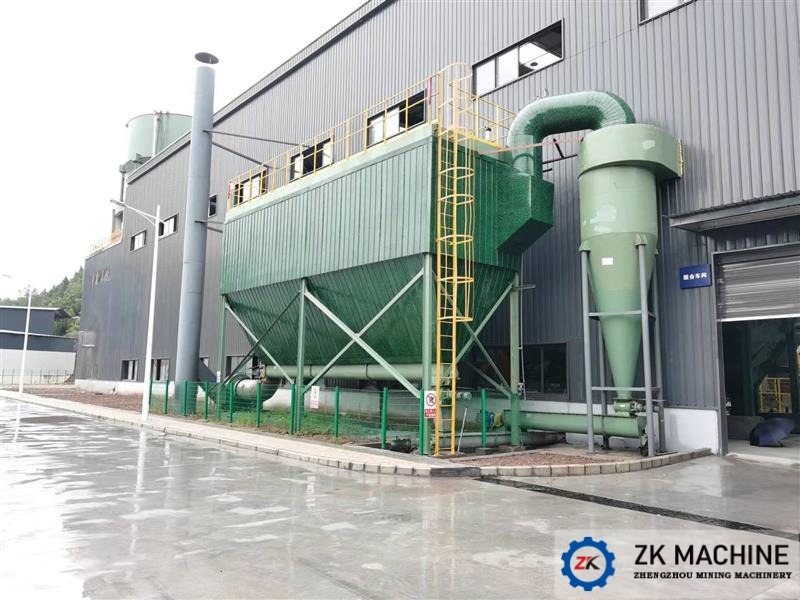
ZK’s Bag Filter has been designed with full consideration of users’ actual production needs, offering the following significant advantages:
The bag filter demonstrates extremely high capture capability for fine dust particles larger than 0.3 microns, achieving a dust removal efficiency of over 99%. The dust cake formed on the filter media surface makes it an effective filtration medium for both coarse and fine particles, capable of meeting increasingly stringent ultra-low emission requirements.
The equipment features an all-steel split structure design, facilitating transportation and on-site installation. The optimized inlet and outlet duct design promotes uniform airflow distribution, while the anti-leakage design effectively reduces the equipment’s air leakage rate, ensuring long-term stable operation alongside main processing equipment.
The pulse-jet cleaning method allows cleaning intensity and frequency to be flexibly adjusted according to operating conditions, enabling continuous online cleaning. Cleaning control can operate based on differential pressure or timed modes, activating only when bag resistance reaches a set threshold, effectively conserving compressed air energy consumption.
The equipment is widely used for purification, dust removal, and material recovery of non-fibrous dust in metallurgy, building materials, chemicals, mining, machinery, and other industrial enterprises. It can handle dust-laden gases from various working conditions including stone plants, cement plants, lime plants, steel plants, coal washing plants, and fertilizer plants.
The working principle of the bag filter can be summarized as the “fibrous filtration capture method,” with the core process described as follows:
Dust-laden gas enters the hopper through the inlet duct. Coarser particles are directly separated by settlement due to reduced gas velocity and collision with guide plates, falling to the lower hopper. Fine dust rises with the airflow into the middle chamber filtration zone, dispersing among the filter bags.
As dust-laden gas passes through the filter bags, dust particles are retained on the outer surface through inertial impaction, interception, diffusion, and electrostatic effects. As filtration proceeds, dust gradually accumulates on the filter media surface to form a dust cake—this initial layer itself becomes a highly efficient filtration medium, significantly enhancing dust removal efficiency.
When the dust layer on the bag surface thickens to a set resistance value, the cleaning control device opens the pulse valve according to a programmed sequence. Compressed air is injected at extremely short duration through nozzles on the blowpipe into the bags at high speed, inducing several times the injection volume of secondary air into the bags. This causes the bags to expand abruptly and generate impact vibration, shaking the dust adhering to the outer surface into the hopper.
Cleaning is performed in a row-by-row rotating manner, with only a portion of bags being cleaned at any given time while the remaining bags continue filtration, ensuring uninterrupted operation of the dust collector. Dust falling into the hopper is discharged through the ash discharge device, achieving complete gas-solid separation.
Throughout this process, the rational design of the pulse cleaning system is critical—the optimized matching of injection pressure, pulse duration, and cleaning cycle determines the regeneration effectiveness and service life of the filter bags, ensuring a continuous, stable, and efficient dust removal process.
Previous:Magnesium Oxide Rotary Kiln: 5 Key Advantages
Next Page:none