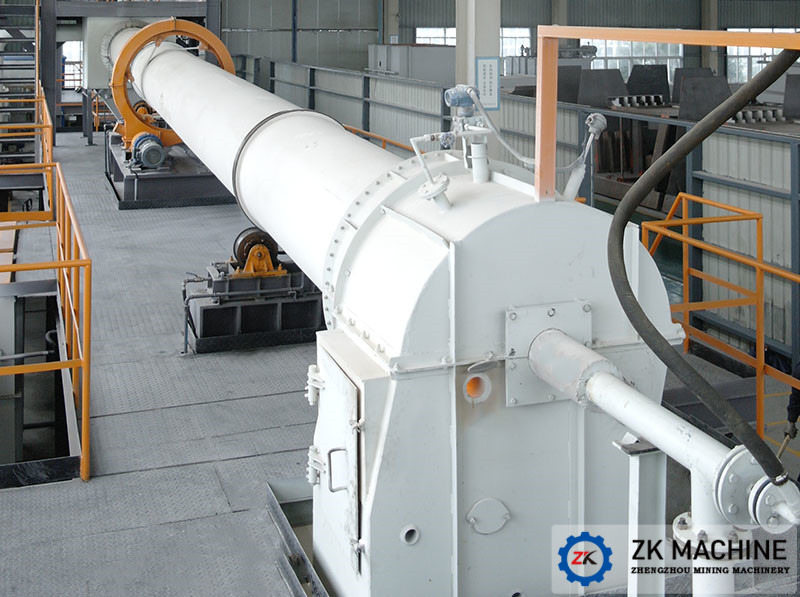
Pilot Production Line: Bridging the “Final Mile” from R&D to Industrialization
Date:2026-02-25 13:35:49
Author:admin
Views:
154
In an era of rapid technological innovation, groundbreaking lab achievements emerge one after another. Yet scaling up to mass production often proves an insurmountable gap—dubbed the "Valley of Death" in the industry. The pilot production line stands as the vital bridge between laboratory research and industrial manufacturing, an indispensable link in the transformation of scientific and technological achievements into tangible productivity.
Pilot-scale Production refers to the intermediate testing phase that follows successful lab-scale trials and precedes large-scale commercial production. It is a systematic validation process for process routes, equipment selection, operating parameters, and the stability of product quality, among other critical factors. More than just simulating real industrial conditions, a pilot production line is tasked with optimizing processes, controlling costs, and verifying safety and environmental compliance.
The significance of pilot testing is reflected in the following key aspects:
-
Feasibility Validation: Lab conditions are idealized, while actual production abounds with variables. Pilot testing uncovers problems caused by the scale-up effect, such as reduced heat transfer efficiency, uneven mixing, and increased side reactions.
-
Investment Risk Mitigation: Jumping directly from lab experiments to ten-thousand-ton production lines risks massive losses in the event of failure. Pilot testing verifies the technical and economic viability of a technology with relatively low investment, providing data-driven support for subsequent decision-making.
-
Faster Market Launch: Robust pilot test data drastically shortens approval cycles, a critical advantage in sectors such as pharmaceuticals, advanced materials, and new energy.
-
Capital and Partnership Attraction: Projects with a fully developed pilot capability are more likely to secure government support, win the favor of industrial capital, and gain the trust of downstream customers.
An efficient, flexible, and safe pilot production line hinges on a scientific and rigorous design, with the following core principles:
Modular Layout: Facilitates process adjustments and equipment replacement, adapting to the R&D needs of multi-variety, small-batch production.
Automation and Data Acquisition: Integrates DCS/PLC control systems to enable real-time monitoring and process traceability, enhancing experimental repeatability and data value.
Safety and Environmental Priority: Equipped with explosion-proof systems, waste gas treatment, and wastewater recycling facilities to ensure full compliance with relevant standards.
Flexible Capacity Design: Caters to both kilogram-level sample preparation and scalable ton-level validation, balancing R&D needs with early-stage market supply.
Pilot production is not merely a "scaled-up lab"; it is a systematic project that integrates engineering thinking, industrial logic, and scientific research spirit. Partnering with a professional design service provider with interdisciplinary expertise and rich industry experience will significantly boost the success rate of pilot testing, truly bridging the final mile in the transformation of scientific and technological achievements.
Today, with the nation’s heightened focus on hardcore technologies and new productive forces, the construction of pilot testing platforms is reaping dual dividends from policy support and market demand. For universities and research institutes, tech-driven enterprises, and industrial parks alike, building pilot testing capabilities is equivalent to laying the foundation for future competitiveness.
Let every experiment bring you one step closer to mass production.
Let every innovation escape obscurity in the lab.
— Professional turnkey solutions for pilot production lines, empowering your technology to scale from
0 to 1 and leap from
1 to N.